
Foreign Correspondence, Vol 138
Francesca Albanese on the untapped power of international law

Hello, and happy Friday!
Yesterday marked an exciting development in my years-long journey to becoming a full-fledged Brit: I voted in my first UK election.
This was a local election, but the days leading up to the vote felt every bit as intense as any of the general elections I’ve covered in the past. Canvassers became fixtures in our neighborhood, armed with pamphlets and stump speeches. I even spotted my local MP Emily Thornberry, the high-profile Labour backbencher and chair of the foreign affairs committee, knocking on doors over the weekend in a seemingly last-ditch effort to get long-time supporters to the ballot box. Because even though her name wasn’t on the ballot, her party’s was — and, if the polls were anything to go by, it was bracing for a beating.
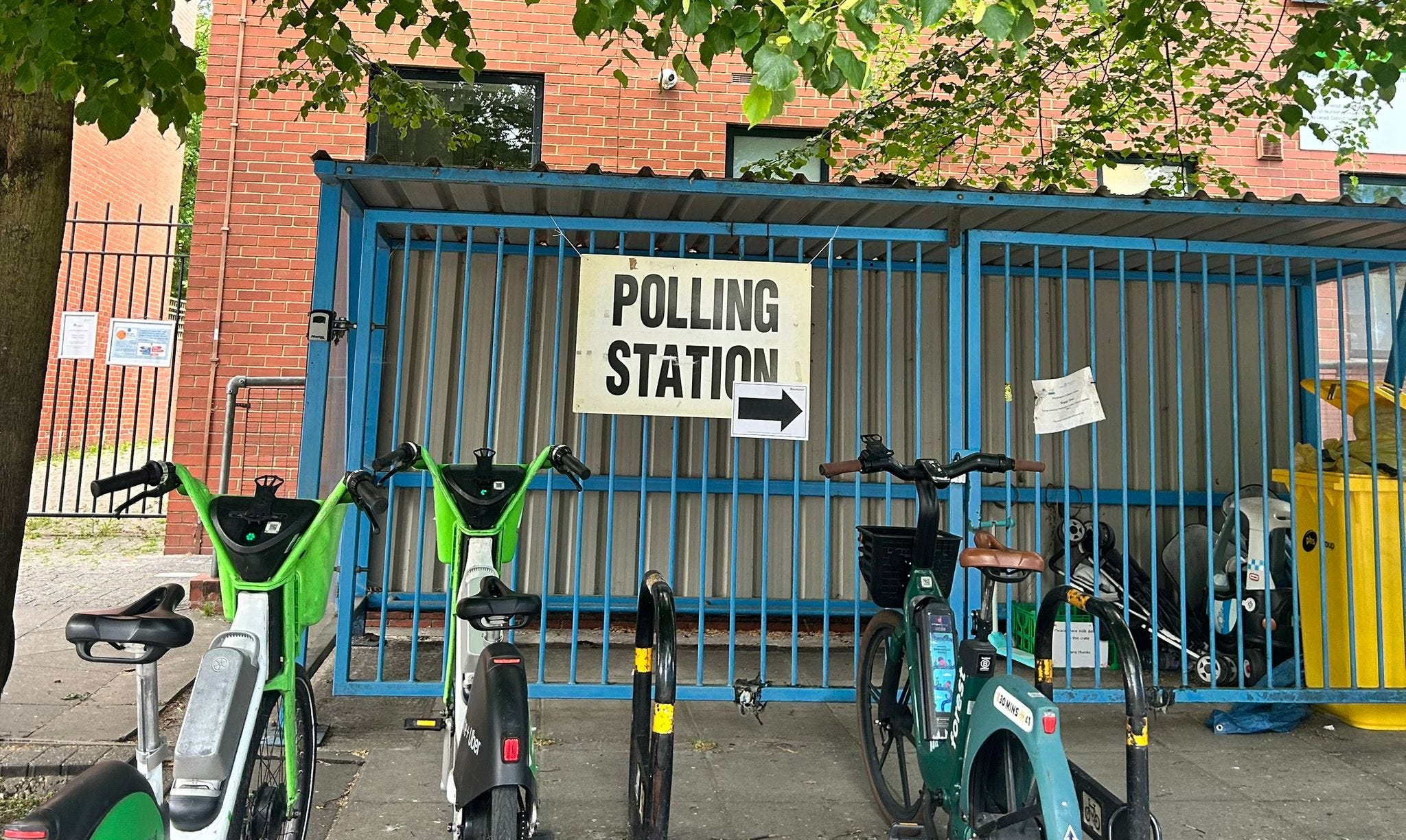
And beaten it was. While vote counting is still ongoing across parts of England, Scotland and Wales — with the latter two also tallying votes for their national parliaments — the results so far paint a bleak picture for Britain’s ruling party, which suffered heavy losses across many of its traditional strongholds to Nigel Farage’s right-wing populist Reform party (which, as of this writing, has scooped up more than 400 seats) as well as the Greens and Liberal Democrats, which made more modest gains.
While the vote was ostensibly about municipal issues like rubbish collection and traffic flows, these contests — not unlike the U.S. midterms — often become a kind of bellwether for how voters are feeling about the state of politics more broadly. The question now is whether the British electorate’s verdict will intensify pressure on Prime Minister Keir Starmer’s leadership — and, if so, who might be waiting in the wings to take his place.
What I’ve worked on

Since becoming the United Nations’ special rapporteur for the Palestinian territories in 2022, Francesca Albanese has emerged as one of the most forceful critics of Israel's military actions in Gaza, becoming one of the first people to label it a genocide.
And not without cost. In July, the United States imposed sanctions on Albanese, the fallout from which she says has been “brutal.” Other European governments have called for her resignation.
For our latest Culture Current, I caught up with Albanese about her new book “When the World Sleeps” — part memoir, part testimony tracing her engagement with the Palestinian question through 10 people who shaped her understanding of it — as well as the impact of the sanctions on her and her family and why she still believes in the power of international law.
In July, you were sanctioned by the U.S. government. How has that changed your day-to-day life?
It has changed my life significantly. I’d been made a financial outcast. Apart from the freezing of assets that we have in the U.S., the personal cost has been heavy. Universities I used to partner with have canceled their cooperation with me. So it’s been brutal.
I often have to hide my identity when I participate in events and people book a room (on my behalf) because if the hotel company is connected to a U.S. entity, they will reject my reservation. It’s very embarrassing; it’s very humiliating. Not being able to have a credit card, to have to borrow money, not being able to access my savings, my earnings, on top of the fact that I’m not even working anymore ... because how am I going to get paid? So it’s really unfortunate. (Editor’s note: Albanese said she agreed not to receive royalties from her U.S. publisher, Other Press, and that she cannot receive royalties from her publishers in other countries because of the sanctions.)
Plus:
City Memos from Belfast, Kuala Lumpur, Amsterdam, Cairo, Warsaw, and San Diego
Our latest editions of Emotional Currency, from dumpster diving to living without living rooms
What I’ve read
This piece on Arsenal’s first Champions League final in decades — and the night of mad beauty that got them there:
The Emirates turned into a stage for unfettered jigs, pogos, salsas — whatever your dancing capabilities, anything went down a treat — as a club turned up the music and danced as one. The Champions League final is a rare thing in these parts and those words have a sweet ring to them.
There was a wildness in the air that seemed fitting at the end of a match that began tightly coiled and descended into chaotic helter-skelter as Arsenal and Atletico Madrid traded hoiked balls, crazed chases and touchline fury. Mikel Arteta has a reputation for seeking control but in the closing stages, that was discarded in the simmering emotion of it all.
This exclusive from The Atlantic on FBI director Kash Patel’s personalized bourbon stash (a report made all the more interesting by the fact that the bureau has reportedly launched an investigation into its author after she covered reports of Patel’s excessive drinking):
Last month, I reported that FBI personnel were alarmed by what they said was erratic behavior and excessive drinking by Patel. (The FBI director has denied the allegations and filed a defamation suit against The Atlantic and me.)
After my story appeared, I heard from people in Patel’s orbit and people he has met at public functions, who told me that it is not unusual for him to travel with a supply of personalized branded bourbon. The bottles bear the imprint of the Kentucky distillery Woodford Reserve, and are engraved with the words “Kash Patel FBI Director,” as well as a rendering of an FBI shield. Surrounding the shield is a band of text featuring Patel’s director title and his favored spelling of his first name: Ka$h. An eagle holds the shield in its talons, along with the number 9, presumably a reference to Patel’s place in the history of FBI directors. In some cases, the 750-milliliter bottles bear Patel’s signature, with “#9” there as well. One such bottle popped up on an online auction site shortly after my story appeared, and The Atlantic later purchased it. (The person who sold it to us did not want to be named, but said that the bottle was a gift from Patel at an event in Las Vegas.)
This dispatch from Gaza amid a ceasefire in name only:
It has been six months since the cease-fire was announced in Gaza, when the war was officially stopped. But it hasn’t stopped, not really. The Israeli airstrikes are less constant, but they still kill us — there was a drone strike that killed a man and injured a child just this week. When I talk to people abroad, they ask me if I can still hear Israeli drones at night. Once, I tried to record the buzzing as one hovered above my home, proof of the sound that has become a part of Gaza the way the sound of my own breathing is a part of me.
What I’m thinking about
How insufferable I (and everyone else in North London) is going to become if Arsenal win the Premier League, the Champions League, or both.
To quote ultimate Gooner Anne Hathaway, “Inshallah.”

Until next time,
Yasmeen